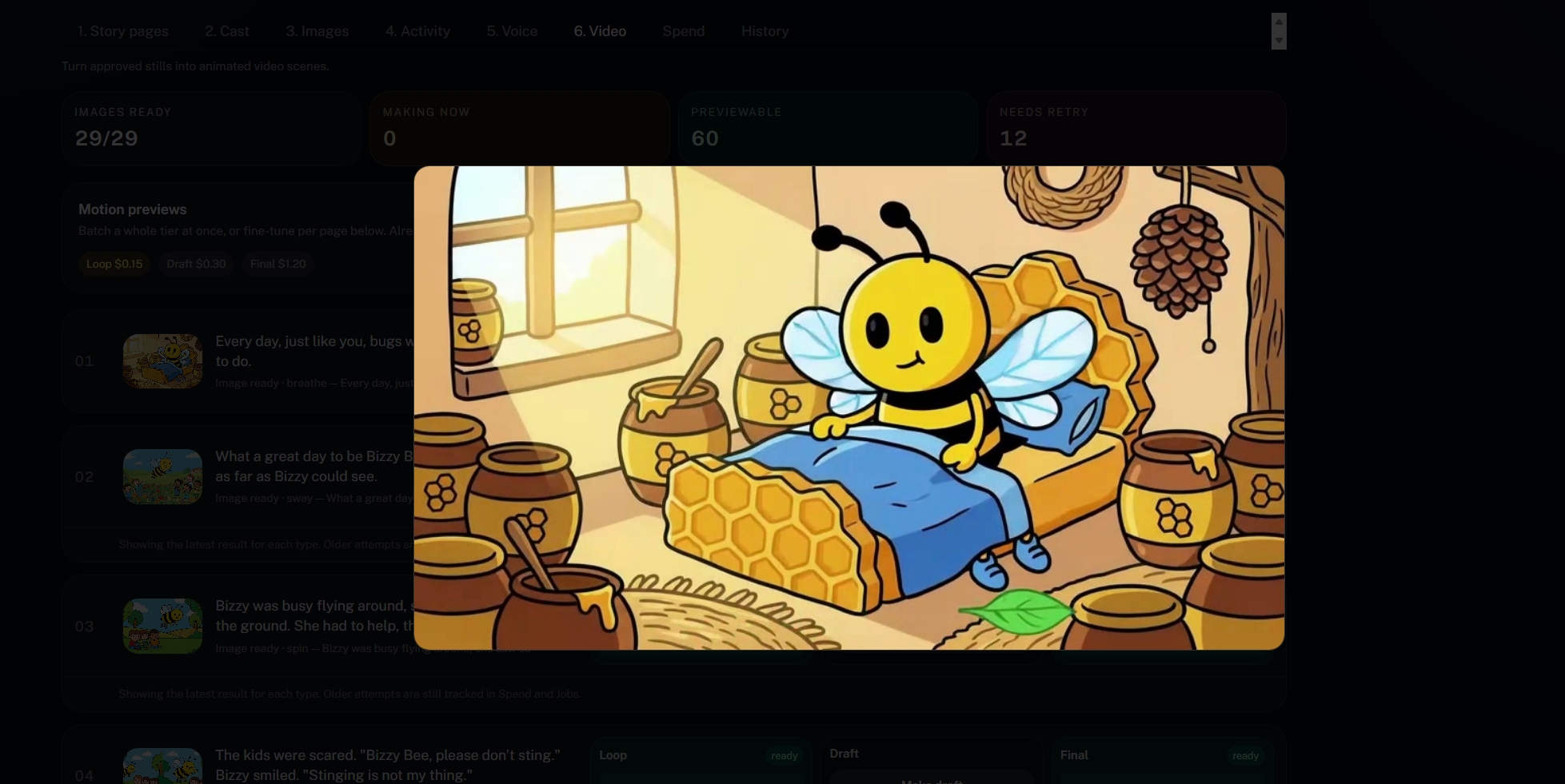
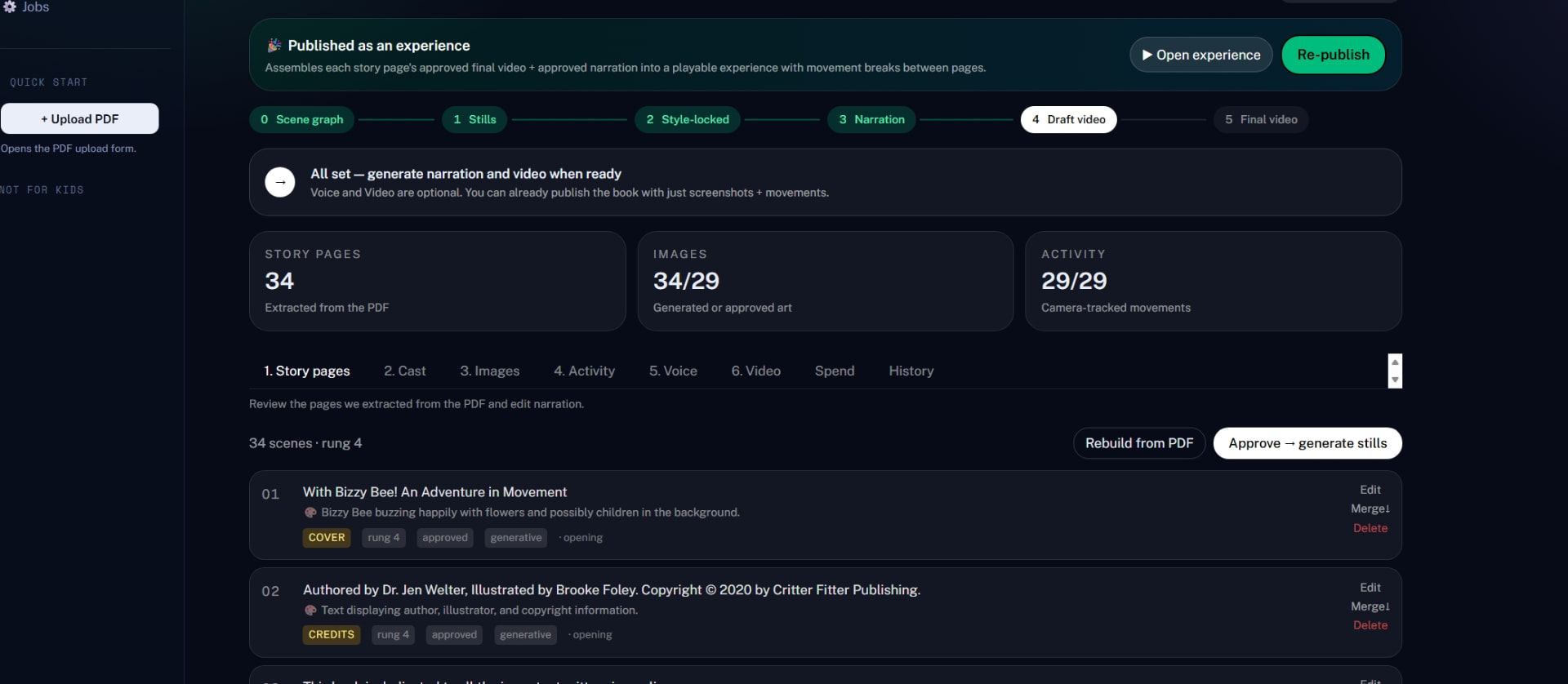
Step 01
Ingest
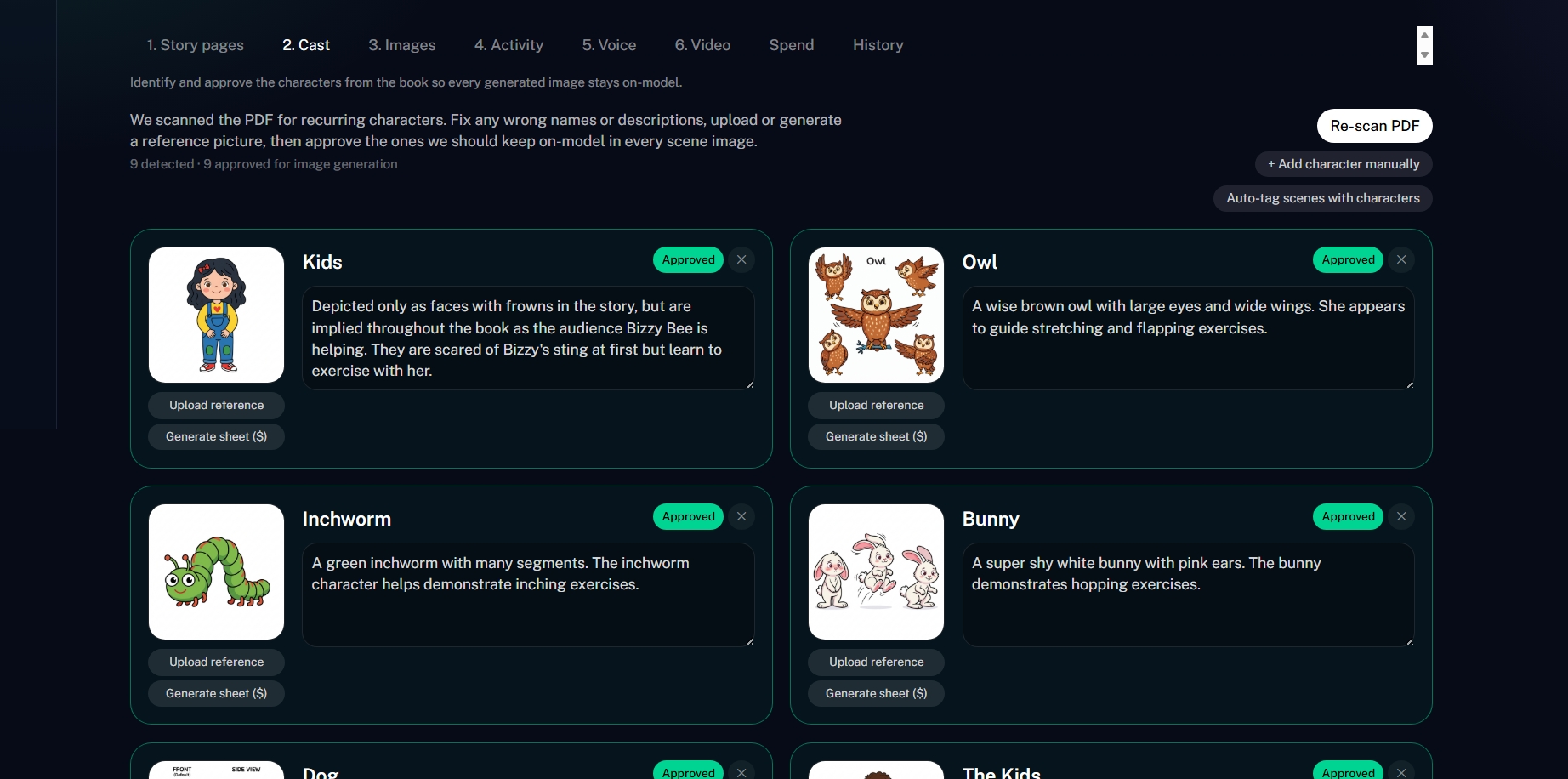
The PDF is read page by page into a scene graph — text, beats, and structure.
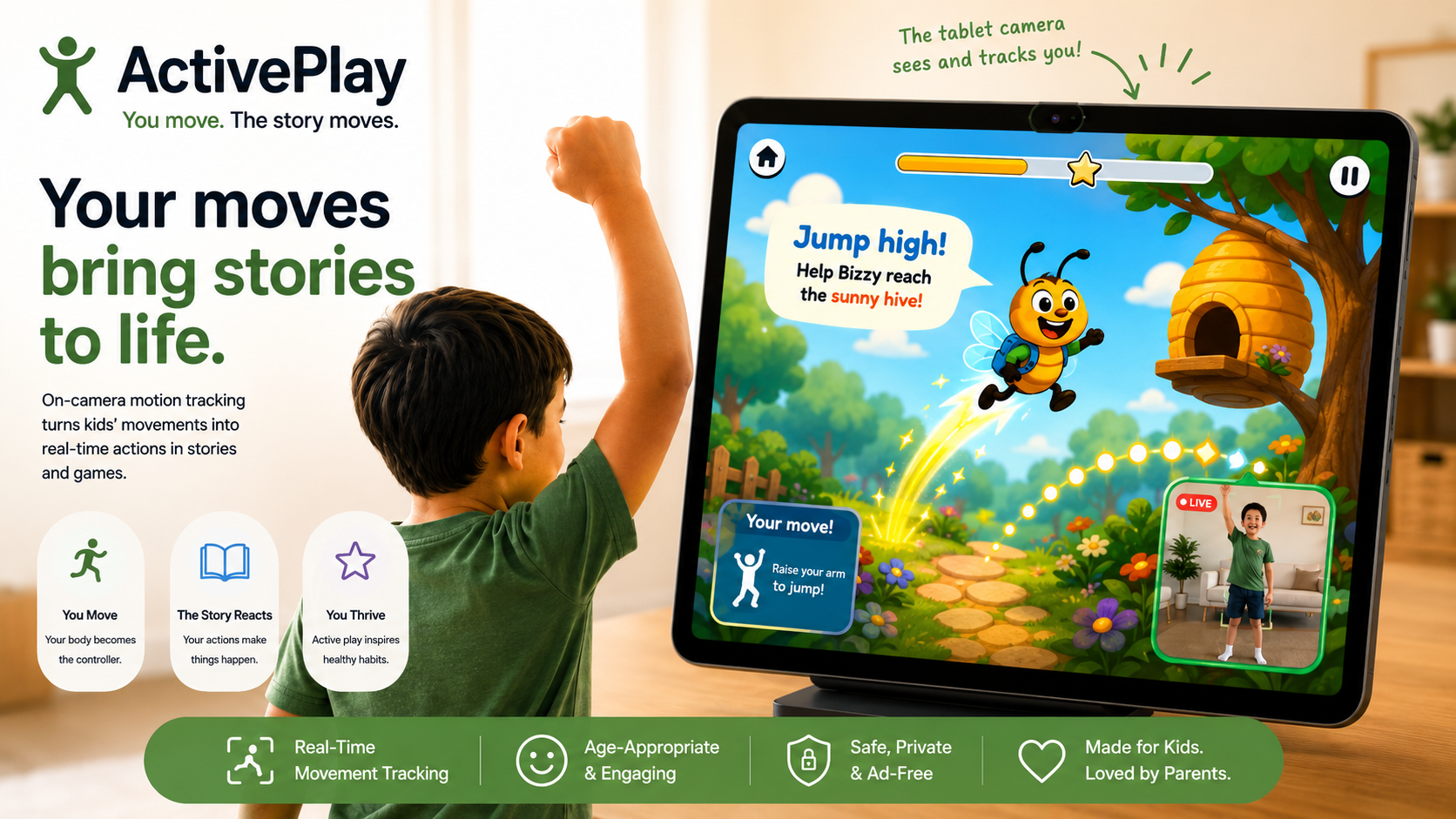
ActivePlay is the infrastructure that makes children's content ask something of the body. One on-device engine sees the moves, counts the reps and gates the progress. Plug in a picture book or a creator's YouTube library and it comes out as something kids have to move through. Nothing uploads.
The same engine counts reps, scores matches and awards points. Only the content source changes.
Publishers hand us a PDF. Studio rebuilds it into a story that won't turn the page until the child moves.
Play the bookA creator's active videos become move-along sessions. Kids earn points and rewards, parents subscribe for tracking and exclusives, and the creator gets a revenue share.
Open the creator hubThe same layer as an SDK: movement as the unlock mechanic inside the apps kids already open.
34 pages. A PDF. Nothing to do but turn them.
The page won't turn until the reps are done. 6 gates, ~40 reps, 15 minutes.
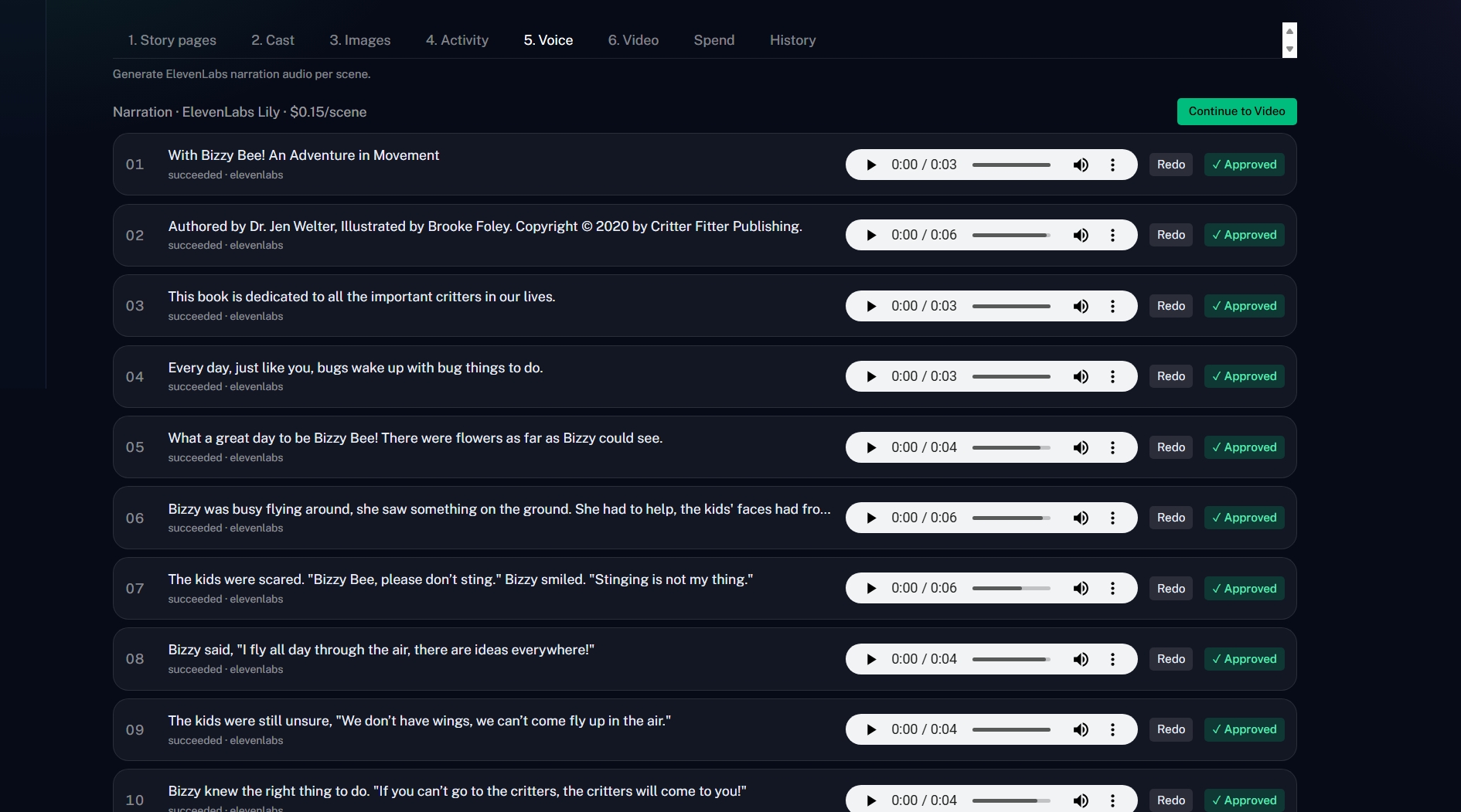
The same story animated and narrated straight through, cues on the beat.
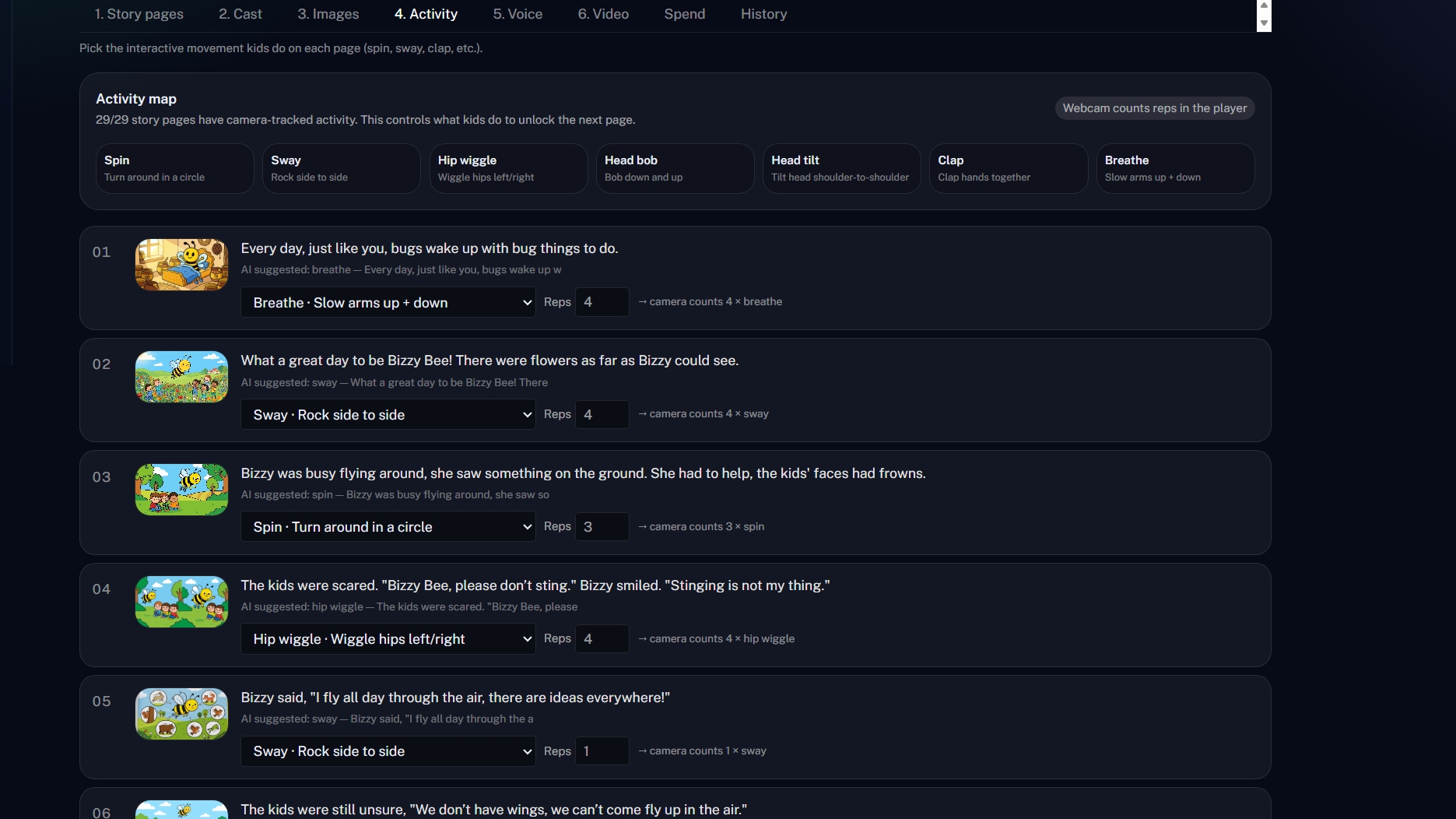
Every page mapped to a real movement — breathe, sway, spin — scored to the story.
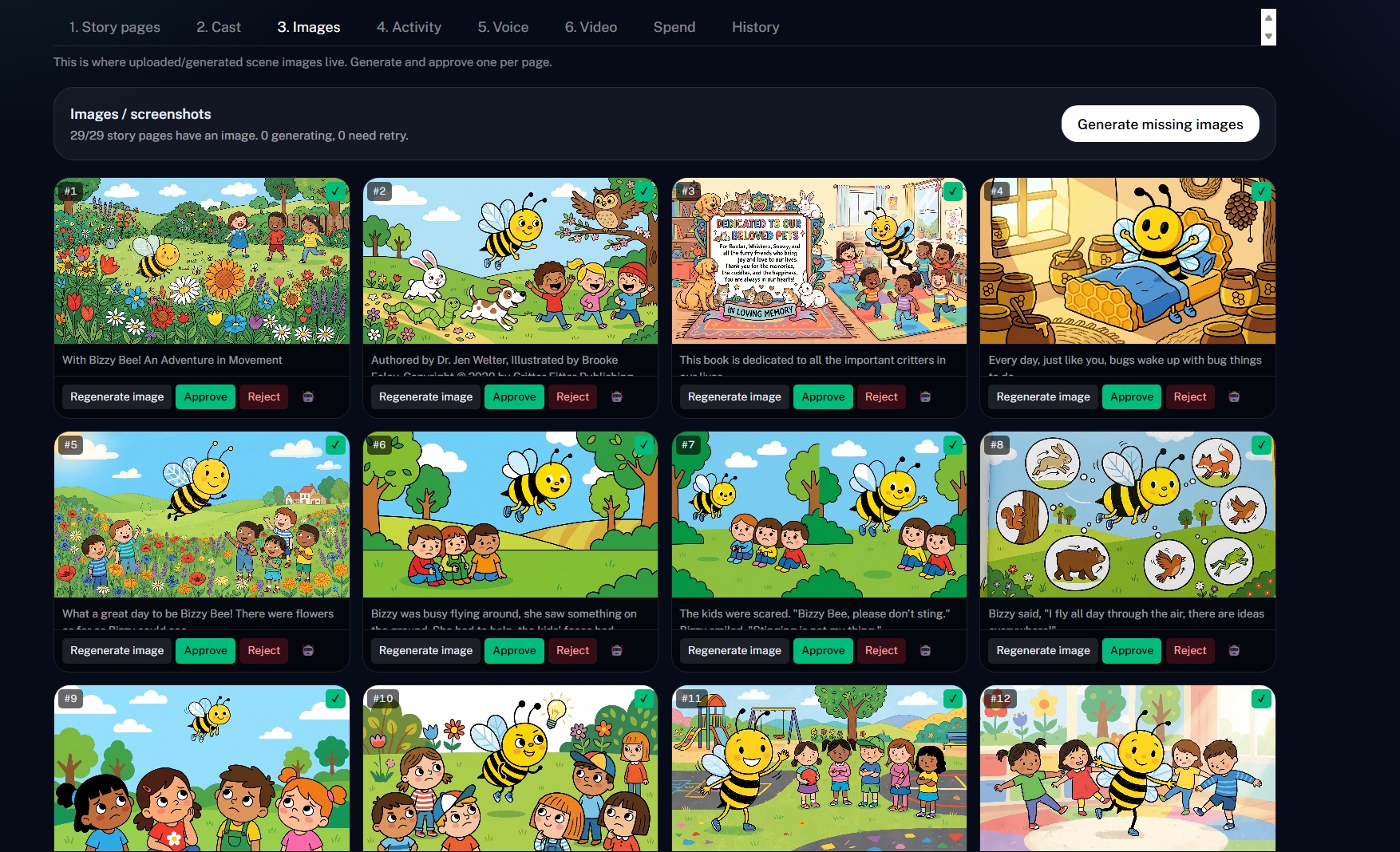
The book's art regenerated as on-model stills the publisher can use anywhere.
One ingest. Every format. It's one pipeline and one cost, not four product lines — and the rights holder approves all of it before it ships.
Every product built for this moment does the same thing. It limits the screen, locks the app, sets the timer. All of them treat the device as the enemy, and not one of them produces a single minute of movement.
We think that's the wrong answer to the right question. Kids won't read more because the tablet got taken away, and they won't move more because an app shut itself off. They'll move if the thing on the screen requires it.
Picture books compete for attention against feeds built by teams of hundreds and tuned never to let go. It was never a fair fight.
Screen hours stack up before a child is old enough to choose otherwise. The habit sets early and it holds.
Parents get one lever: allow it or fight about it. Nothing on the market turns the screen itself into the reason a kid moves.
So we built the third option. Learning and physical activity, in the same twenty minutes, on the device they were going to open anyway.
One book, fully rebuilt. Here's exactly what a session looks like.
The story opens. The original illustrations from the published book, page by page, narrated aloud with the words highlighted as they're read.
Page four ends and the story stops. Bizzy needs help flying. The screen says: flap with Bizzy. Ten flaps to turn the page.
The child flaps. On-device pose tracking counts every rep in real time and the counter climbs. There's no timer and no pressure — the page waits as long as it takes. The camera is how the story moves, so it stays on the whole way through.
Ten reps. The page turns. The story continues, and it does not continue before then.
Twelve pages. Six movement gates. Roughly forty reps across about fifteen minutes.
No app install, no hardware, no accessories.
Pose runs entirely on the device, COPPA-minded by design.
The unit economics hold at any scale.
Every title also ships as a move-along video — the same story animated and narrated straight through, with movement cues on the beat, for kids who'd rather follow than lead.
A publisher hands us a PDF. This is everything that happens between that file and a shelf of finished assets — the interactive story, the animated short, the activity map, the scene library. One ingest and one cost produces all of it, not four separate product lines.
Nothing generates without sign-off. Every scene and every line of narration is approved before a dollar is spent — by our team, and by the rights holder.
We only convert titles we're licensed to convert. The author or publisher approves the output before it ships, and their name stays on it.
Strip away the story and what's left is a small, general machine: pose in, progression out. It doesn't care whether the thing being gated is a page, a scene, or a level. Books are simply where the rights are cleanest and the partners are willing.
Real catalogs from real authors, rebuilt page by page. Licensed, revenue-shared, live today.
The same stories as narrated shorts with movement cues on the beat, distributed where kids already watch.
Movement as the unlock mechanic inside the games and video they open on their own. That's where the hours actually are, and that's the layer everything is pointed at.
Every hour a child spends on a screen is an hour that could be asking something of their body. We're building the layer that makes it ask.
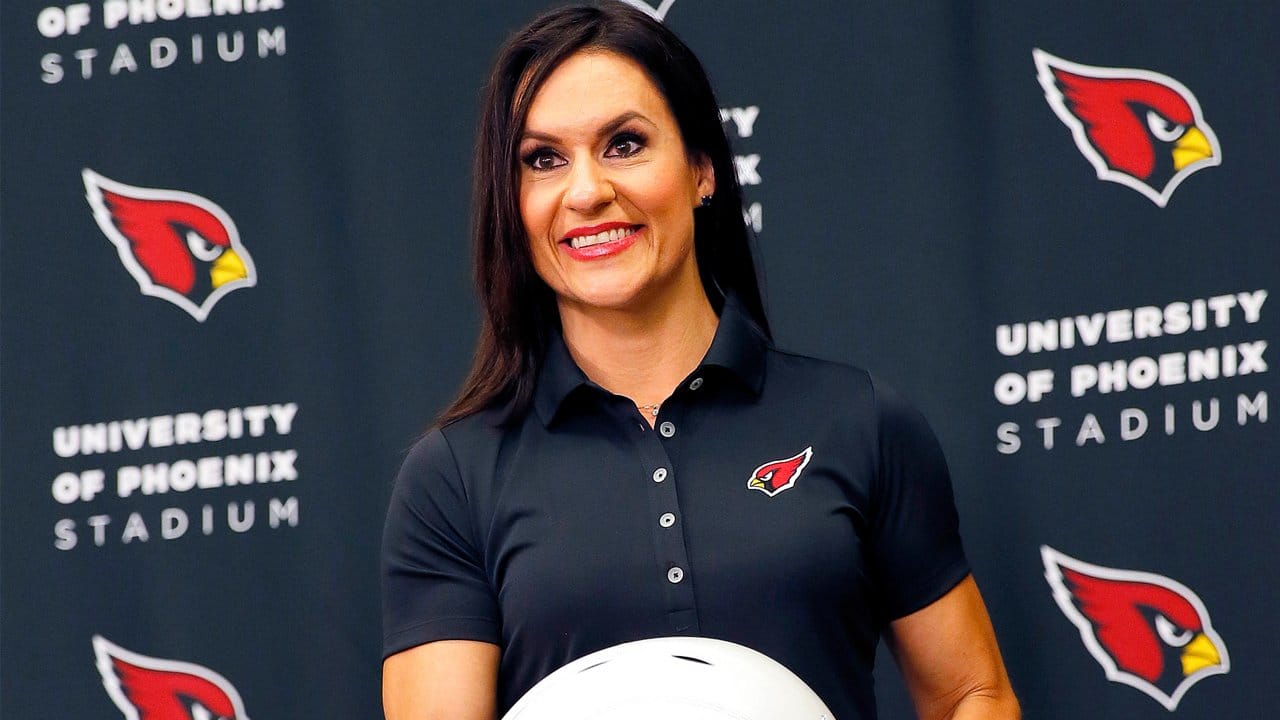
The first woman to coach in the NFL — and the author behind the Critter Fitter series, picture books written from the ground up to get kids moving. Her library is the foundation of the ActivePlay catalog, and her author network is the pipeline behind it.
Her hire opened the door for the women who followed, from Kathryn Smith to Katie Sowers.
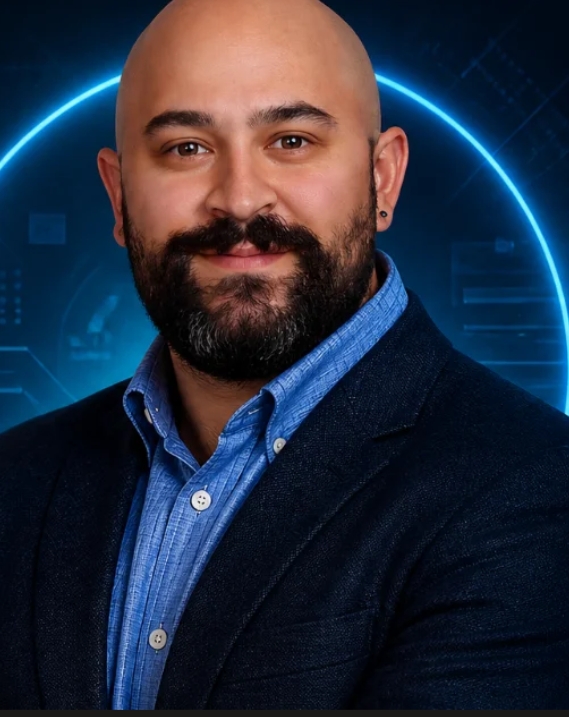
Formerly VP of AI and Emerging Technology at Stride Inc. (NYSE: LRN) and VP at Lee Enterprises (NASDAQ: LEE), where he shipped learning and media products at national scale. ActivePlay came out of a simple frustration: the best children's books sit still while everything else competes for a kid's attention.
He works directly with authors and publishers to rebuild their catalogs into stories kids have to move through.
Your backlist is a PDF sitting on a server. We turn each title into a playable experience, an animated short, and a reusable scene library — your art, your author, your brand, revenue-shared on every session.